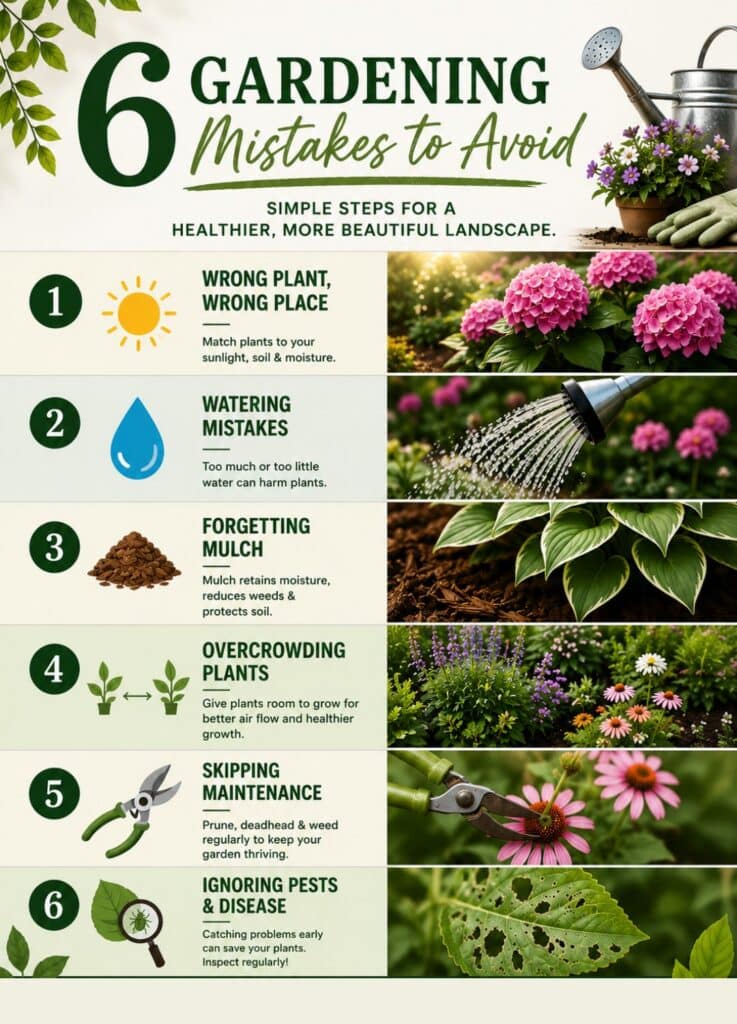
 Creating a beautiful garden doesn’t require a green thumb, but it requires avoiding a few common mistakes. Whether you’re planting colorful flower beds, adding shrubs, or refreshing your landscape, small decisions can have a big impact on the health and appearance of your yard.
Many gardening problems can be prevented before they start. By understanding what your plants need and giving them proper care throughout the growing season, you’ll enjoy healthier plants, fewer pests, and a landscape that looks beautiful year after year.
Choose the Right Plants and Give Them the Right Start
1. Plant for Your Growing Conditions
One of the most common gardening mistakes is choosing plants based only on their appearance. While it’s easy to fall in love with a flower at the garden center, every plant has different needs for sunlight, soil, and moisture.
Before planting, pay attention to how much sun each area of your yard receives throughout the day. Some plants thrive in full sun, while others perform best in partial shade or full shade. Matching plants to the conditions they prefer will greatly improve their long-term success.
2. Avoid Overcrowding
New plants often look small when they’re first installed, making it tempting to plant them close together. However, most shrubs, perennials, and ornamental grasses grow much larger over time.
Leaving adequate space allows for better airflow, reduces the risk of fungal diseases, and helps each plant develop into its natural shape without competing for nutrients and water.
3. Improve Your Soil Before Planting
Healthy soil is the foundation of every successful garden. Adding compost or other organic matter improves drainage, encourages healthy root growth, and provides nutrients that plants need throughout the season.
Taking the time to prepare your soil before planting often results in stronger, healthier plants with fewer maintenance issues later.
Maintain Your Garden for Long-Term Success
4. Water Consistently
Both overwatering and underwatering can damage plants. Instead of watering lightly every day, aim for deep watering that encourages roots to grow farther into the soil.
Watering early in the morning is generally the best practice because it allows moisture to soak into the ground while giving leaves time to dry, helping reduce the risk of disease.
5. Don’t Skip Mulch
Mulch does far more than improve the appearance of your landscape beds. A two- to three-inch layer helps retain soil moisture, regulate soil temperature, and reduce weed growth throughout the season.
Be careful not to pile mulch directly against tree trunks or the base of plants, as this can trap excess moisture and contribute to rot.
6. Stay Ahead of Weeds and Pests
Small problems are much easier to manage than large ones. Pull weeds while they’re young, inspect plants regularly for signs of insects or disease, and remove damaged foliage when necessary.
Routine maintenance throughout the growing season can prevent bigger issues and keep your landscape looking its best.
Give Your Garden Regular Attention
Even low-maintenance landscapes benefit from occasional care. Deadheading spent flowers, trimming overgrown plants, edging landscape beds, and refreshing mulch all help create a cleaner, healthier outdoor space.
A few minutes of maintenance each week often saves hours of work later in the season.
Ready to Create a Healthier, More Beautiful Landscape?
Beautiful gardens don’t happen by accident. They’re the result of thoughtful planning and consistent care. If you’re ready to enhance your outdoor space or would like help creating a landscape that’s both beautiful and easy to maintain, the experienced team at Naturescapes is here to help. From landscape design and planting to seasonal maintenance, we can help your property look its best throughout the year. Get in touch with us today!